
Exosomes vs. Stem Cells
The Future of Regenerative Medicine Has Arrived — But Which One Is Right for You?
Living in a world of ever-evolving cutting-edge wellness, few topics are stirring more excitement - and more questions - than regenerative medicine. What was once the domain of futuristic science labs, therapies that harness the body’s own power to repair and renew are now making their way into the most advanced longevity clinics and holistic wellness practices around the globe. And at the heart of this revolution are two scientific heavyweights: exosomes and stem cells.
They’re often mentioned in the same breath, and for good reason, as both work at the cellular level to trigger profound healing. But they’re not the same - they’re complementary tools with unique strengths, capabilities, and ideal applications. Understanding the difference is the key to choosing the most powerful path to regeneration for your body.
The Age of Cellular Medicine: Healing From the Inside Out
For decades, medicine has focused on treating illness from the outside - through surgery, pharmaceuticals, or symptom suppression. But regenerative medicine takes a radically different approach by starting at the cellular level, the foundation of every organ, tissue, and biological process. By reawakening your cells’ innate intelligence - their ability to repair damage, communicate effectively, and regenerate tissue - it’s possible to restore balance and vitality in ways traditional approaches simply can’t.
And that’s where stem cells and exosomes come in - two breakthroughs that are rewriting the rules of aging, recovery, and longevity.
Stem Cells: The Master Builders of the Body
If you imagine the human body as a city, the stem cells are its master architects - they are the raw, undifferentiated cells with the extraordinary ability to become virtually any type of specialized cell the body needs. Muscle, cartilage, bone, nerve tissue - stem cells can transform into them all. And that makes them essential for repair and regeneration.
So when injury, illness, or aging causes damage, stem cells migrate to the affected area and begin rebuilding. They don’t just replace damaged cells; they also release bioactive molecules that reduce inflammation, recruit other healing cells, and accelerate repair.
This is best for:
- Joint and musculoskeletal injuries (like ACL tears or osteoarthritis)
- Degenerative conditions (such as cartilage loss or tendon damage)
- Tissue regeneration post-surgery
- Slowing age-related decline in organs and systems
In other words, stem cells are the body’s construction crew - rebuilding what’s been lost and strengthening what remains.
Exosomes: The Tiny Messengers With Big Impact
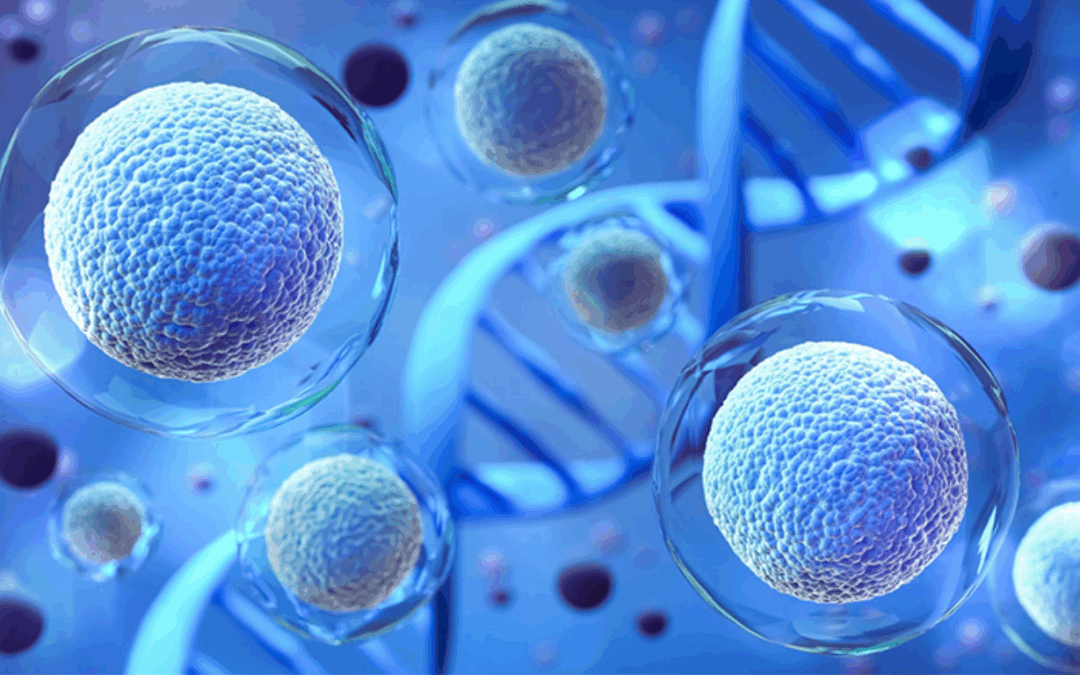
If stem cells are the architects, exosomes are the master communicators. These nano-sized vesicles - microscopic “bubbles” secreted by stem cells and other healthy cells - that act as messengers, carrying molecular instructions between cells. They’re loaded with powerful biological signals like growth factors, proteins, lipids, and microRNAs all of which tell cells how to behave.
Think of them as the body’s text messages: they don’t build tissue directly, but they direct the body’s healing orchestra — reducing inflammation, activating repair pathways, and reprogramming dysfunctional cells back to health.
Best for:
- Chronic inflammation and immune dysregulation
- Post-viral or post-illness recovery (including Long COVID)
- Cellular “communication breakdown” associated with aging
- Skin rejuvenation, hair restoration, and aesthetic applications
- Supporting cognitive and neurological health
Exosomes excel at optimizing cell signaling - which means faster, more coordinated healing, often with minimal downtime.
Stem Cells vs. Exosomes: The Key Differences
While stem cells and exosomes are deeply interconnected. In fact, many of stem cells’ most powerful effects come through the exosomes they release and their roles in regenerative medicine are distinct. Here’s how they compare:
|
Feature |
Stem Cells |
Exosomes |
|
Origin |
Derived from your own body (autologous) or from ethically sourced donor tissue (allogeneic) |
Naturally secreted by stem cells and other cells |
|
Function |
Replace and regenerate damaged cells and tissue |
Communicate with existing cells to enhance repair |
|
Mechanism |
Transform into new tissue, secrete growth factors, modulate inflammation |
Deliver molecular instructions that trigger cellular healing |
|
Best For |
Structural repair (joints, cartilage, tendons, organ tissue) |
Signaling repair (inflammation, immune modulation, cellular aging) |
|
Recovery Time |
Often longer (tissue regeneration takes time) |
Usually shorter (cell signaling begins immediately) |
A Symphony of Regeneration: Why the Best Results Often Combine Both
One of the most exciting developments in regenerative medicine is the combined use of stem cells and exosomes. Think of it as a two-part symphony: stem cells provide the raw materials needed to repair tissue while exosomes ensure each cell plays its part perfectly.
This dual approach is especially powerful for complex conditions like osteoarthritis, post-surgical recovery, autoimmune issues, and age-related degeneration, where both tissue damage and cellular miscommunication are at play.
The Future of Anti-Aging and Longevity
While regenerative medicine has already transformed orthopedic and surgical recovery, its potential goes far beyond that. Scientists are now exploring stem cells and exosomes as tools to reverse biological aging, not just slowing it down but actually turning back the clock on cellular function.
From skin rejuvenation and hair restoration to cognitive enhancement and immune optimization, these therapies are reshaping how we define “aging gracefully.” They’re not about superficial fixes but about resetting the body’s internal blueprint.
The BioVitalis Philosophy: Where Science Meets Cellular Wisdom
At BioVitalis by Centro Holistico, regenerative medicine isn’t a futuristic concept but a daily reality. Here, the most advanced therapies are paired with a deeply holistic philosophy: that true healing doesn’t just treat symptoms, it restores balance at the cellular level.
“Our goal isn’t simply to fix what’s broken,” the BioVitalis team explains. “It’s to remind the body how to heal - to reawaken its natural intelligence so it can repair, rejuvenate, and thrive.”
Whether through the architectural precision of stem cells, the elegant communication of exosomes, or the transformative synergy of both, BioVitalis offers a new way forward - one that’s rooted in science, guided by nature, and designed to help you feel not just better, but younger, stronger, and more alive.